
Few SEO specialists talk about how social media activity affects the promotion of appliance repair companies in the US. Social media usually goes to the SMM team, while the SEO team handles the website and Google Business Profile separately. Using our client as an example, we’ll show why that’s a mistake in 2026: Facebook and Instagram have become a full-fledged part of the promotion strategy. They send Google additional signals that the business is active, take up spots in organic search results, and fill the company’s Google profile itself with content.
How Social Media Can Help You Get Your First Leads
The first few months are the hardest period for a new appliance repair business. The website hasn’t earned Google’s trust yet and ranks far beyond the first page. A brand-new Google Business Profile barely makes it into the Map Pack: it has no reviews and no history. This is exactly the stage where social media helps the most. Google has said for years that social signals are not a direct ranking factor. Both Matt Cutts and John Mueller have confirmed this. Many people conclude that “social media doesn’t affect SEO.” Likes don’t push a website up in search results, and we agree with that. But for local businesses, social media works differently:
- social media pages rank in Google on their own, just like regular web pages. For customers, it’s one more entry point; for the business, it’s the first calls while the website grows;
- Google integrates social media directly into Google Business Profile (when the profile is set up correctly). Posts from Facebook and Instagram are often pulled into the business listing.
- social media helps Google confirm that the business is real and operating. The same name, phone number, and service area on the website, in GBP, and on social media, plus regular posts, show the history of a working company rather than a temporary “pin on the map.”
This last point matters especially in the appliance repair niche: it’s full of lead generators, fake map listings, and website “networks,” so Google treats new profiles with caution. People need trust too. On top of that, social media brings direct inquiries: Messenger and Instagram DMs, recommendations in local Facebook groups, and calls from the button on the page. In our case study (more on it below), the Facebook page reached the top 3 organic results in just 2 weeks, earlier than the website itself, and became one of the first sources of leads.
What a Promotion Strategy Consists of in 2026
Traditionally, promoting an appliance repair business in the US comes down to optimizing the website + Google Maps listing combo. In short, here are the main elements of promotion and optimization (for a detailed breakdown of how to promote an appliance repair website, see our separate article):
- Google Business Profile;
- Website – we covered what an appliance repair website should look like in a separate article;
- A properly configured connection between the website and GBP;
- Consistent NAP;
- Reviews.
Social media usually doesn’t make this list. But, as it turned out, in 2026 it belongs there too, and here’s why.
How Social Media Boosts Promotion: 5 Mechanisms
1. Additional Spots in Organic Search Results
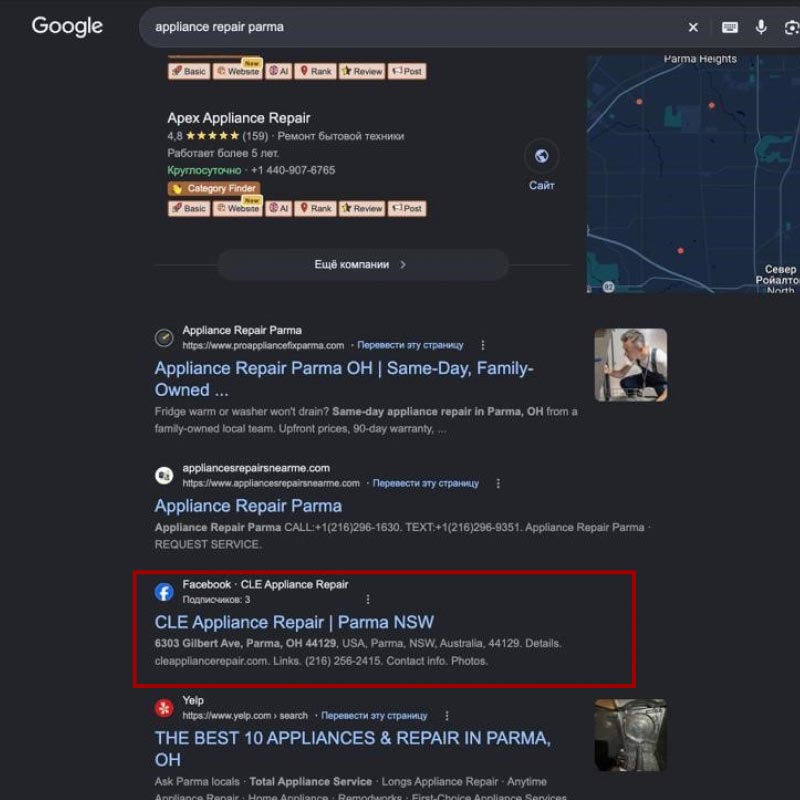
Facebook is a domain with enormous authority. A business page with the service and city in its name and description can reach the top of organic results faster than a new website that has no links and no history yet. For a young business, this is a way to gain visibility in the first months while the website builds authority. In our practice, we’ve had cases where the first leads came specifically from Facebook.
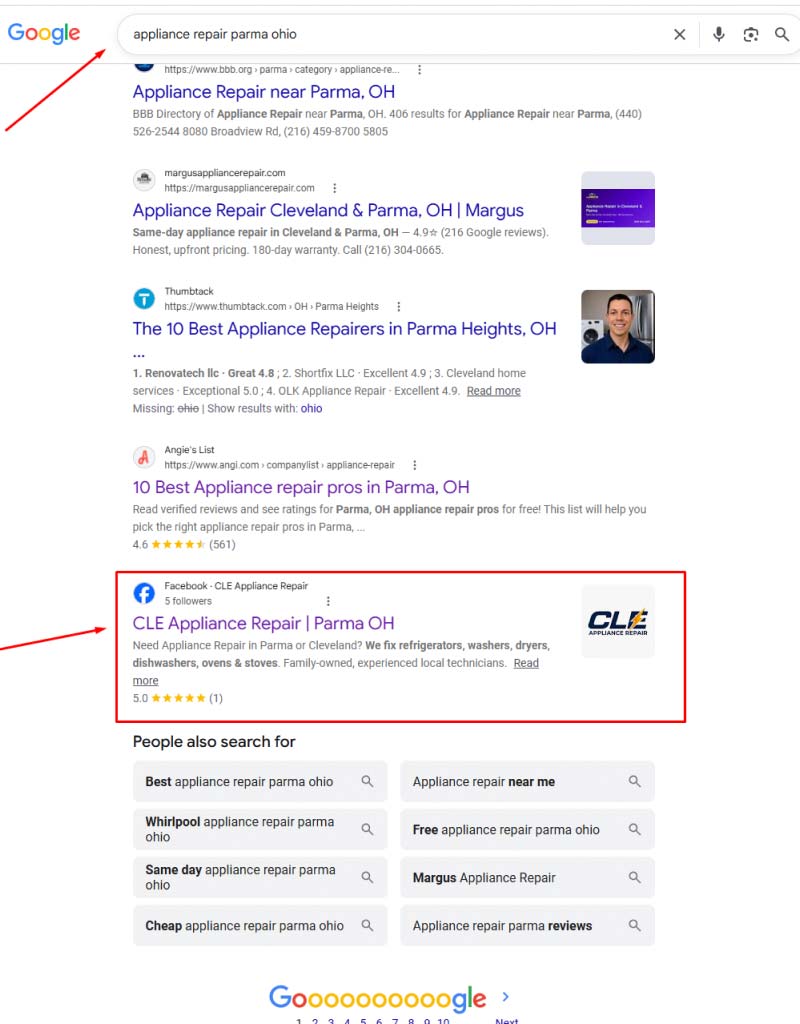
Name the page after your brand, for example CLE Appliance Repair. Choose the Appliance Repair Service category, and add your address or service area, business hours, phone number, and website. Google uses these fields for the snippet. The page should be fully completed and filled with posts, since Google shows empty pages much less often.
2. Instagram Indexing in Google
Since July 10, 2025, Instagram has allowed Google and Bing to index public content from professional accounts (Business and Creator): photos, videos, Reels, and carousels. The conditions: the account is public and professional, and the owner is over 18. Post captions, alt text, and hashtags are now also content that Google sees and can show in search results. A post like “Fixed a Samsung refrigerator not cooling in [neighborhood]” is no longer just a picture but a mini-page targeting a local query.
Open “Settings → Privacy” and make sure public photos and videos are allowed to appear in search engine results. If not, turn it on. A couple of weeks later, search Google for site:instagram.com/your_account to see whether the profile has been indexed.
3. Social Media Posts Right in Google Business Profile
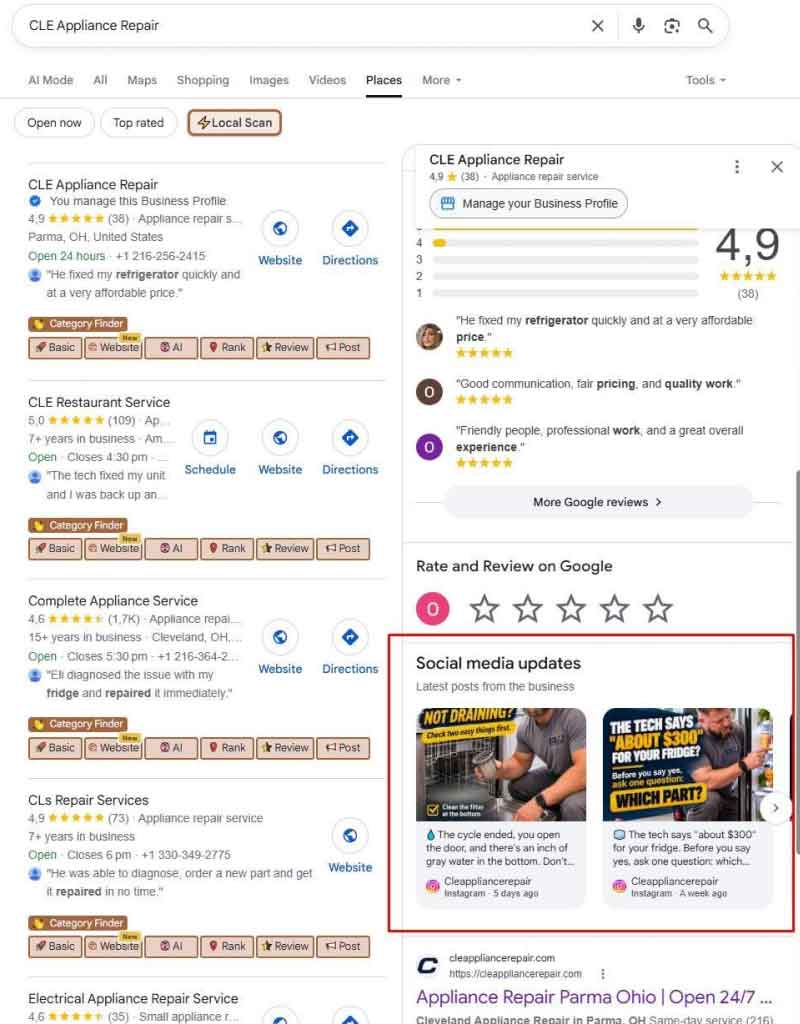
Since fall 2023, you can add social media links to Google Business Profile (one each for Facebook, Instagram, YouTube, TikTok, X, LinkedIn, and Pinterest). And since March 2024, Google automatically pulls recent posts from these accounts into a separate “Social media updates” section of the business profile. For an appliance repair business, this means a customer who opens your listing on the map sees posts from the last few days. The profile looks active even in weeks when you didn’t add posts to GBP itself.
4. Signals That the Business Is Real and Active
Google builds its understanding of a company as an entity by collecting data from different sources. When the website, GBP, Facebook, and Instagram link to each other and contain the same name, phone number, and service area, it’s easier for Google to connect all of it to one business. Regular posts with photos are a sign of an operating business that is hard to fake. Google doesn’t officially confirm that it considers social media activity in rankings, but in our experience, profiles linked this way get off the ground noticeably faster.
5. Growth in Branded Demand
Someone sees a video on Instagram or a recommendation in a neighborhood Facebook group, and when their washing machine breaks down, they type the company name into Google. Branded searches, profile clicks, calls, and direction requests are all positive behavioral signals for the local rankings of both the website and the listing, and social media generates them.
Case Study: Website and Google Business Profile from Scratch + Facebook and Instagram = Leads
Client: an appliance repair service in Parma, Ohio. A new business: no website, no Google profile, no links, no reviews.
Goal: gain visibility in Google as quickly as possible for the main queries (“appliance repair Parma,” “appliance repair near me,” and similar ones) and get the first calls from organic search and maps.
What we did:
- Launched the website cleappliancerepair.com with all the pages needed for launch.
- Created and verified the Google Business Profile.
- Connected the website and GBP.
- From day one, created a Facebook business page and a professional Instagram account with the same name, phone number, and website.
- Added the Facebook and Instagram links to Google Business Profile.
- Created several new pages on the website every week, which gave us a regular reason to post.
- Started posting regularly across GBP, Facebook, and Instagram in parallel: 3 times a week.
- Collected reviews at the same time.
First results (about a month of work):
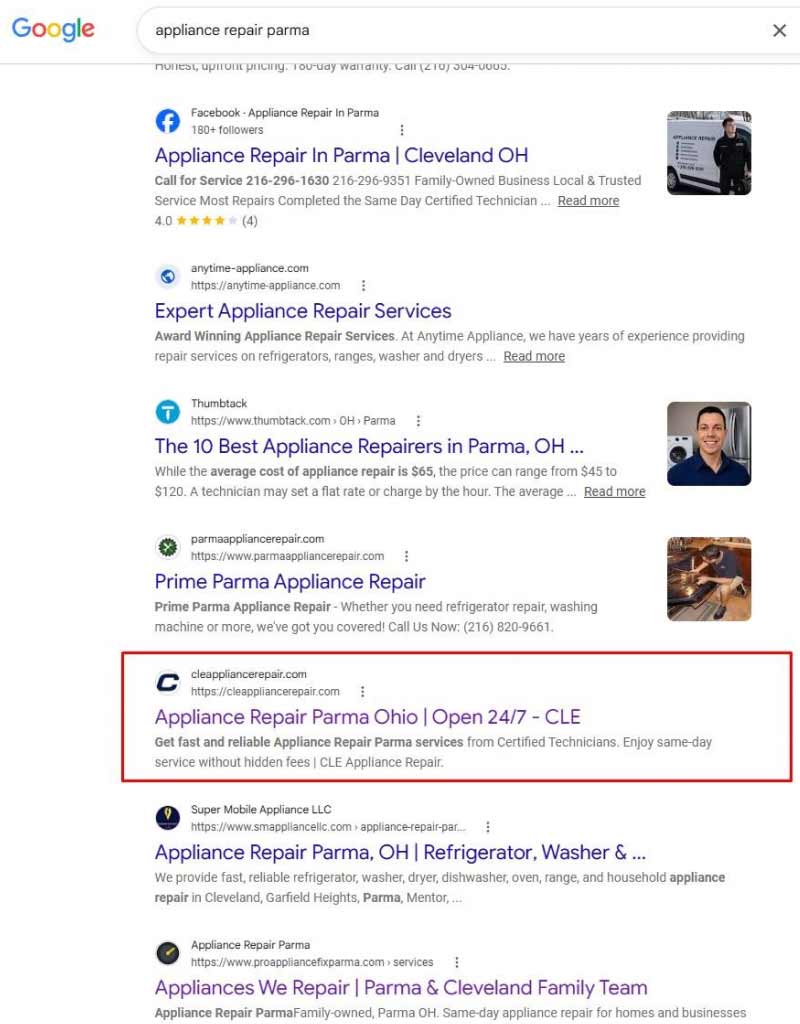
1. After 2 weeks, the Facebook page began appearing in the top 3 organic results for the main query “appliance repair parma.” Much earlier than the website itself.
2. Instagram posts were automatically pulled into Google Business Profile, in the social media updates section (see the screenshot above).
3. Profile views in Google: in a partial October 2026, the profile got 548 views; calls from GBP – 8, website clicks – 28.
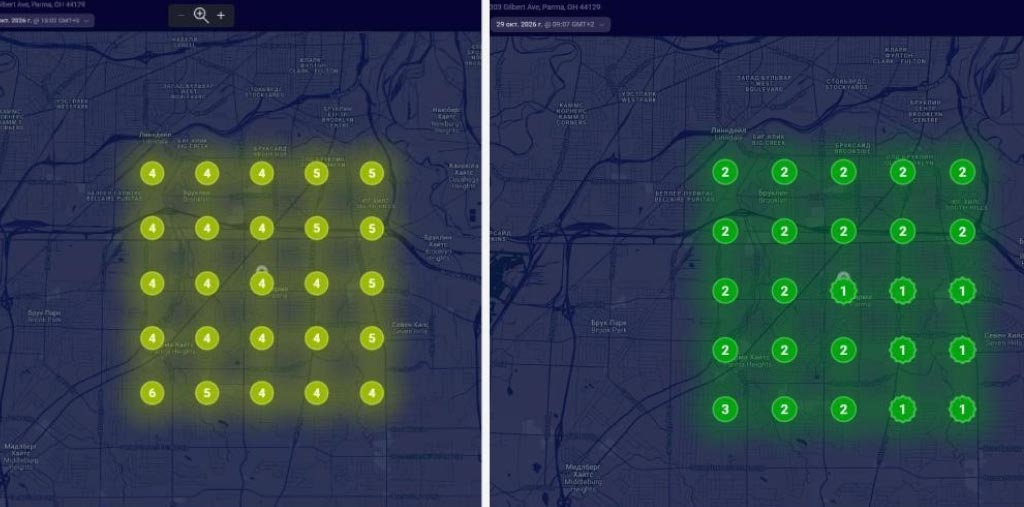
4. Map Pack rankings for the main query rose from 4–6 to 1–2 within 2 weeks:
5. Website ranking: the homepage entered the top 20 in organic search results. For a young domain with no history, that’s a very strong position.
Case study takeaways. While the new website was building trust, the Facebook page was already ranking at the top and bringing people to the company. Instagram made the new Google profile look more alive. As a result, the business gained search visibility within the first weeks, not six months later.
Step-by-Step Launch Plan
- Consistent data. One name, one phone number, one service area: on the website, in GBP, on Facebook, Instagram, and other social networks.
- The right accounts. Facebook — a business page with your website, phone number, and address. Instagram — a public business account with search engine indexing enabled.
- Keywords in profiles. Include the service and city in the page name, Instagram profile name, and description (within your real business name, no spam).
- Cross-links. website → social media, social media → website, GBP → social media.
- Connecting social media to GBP. The “Contact” section → social media links, in the format Google requires.
- A regular schedule. 2–3 posts a week on each network and in GBP. Consistency matters more than frequency.
- Reviews. Collect them steadily: after every job, send the customer a link to leave a Google review.
Common Mistakes
- Different names or phone numbers on the website, in GBP, and on social media.
- A personal profile instead of a business page, or a private or personal Instagram: that content doesn’t get indexed.
- Social media isn’t connected to GBP or listed in the website’s schema markup.
- Abandoned pages: a last post from six months ago hurts trust more than having no page at all.
- Stock photos instead of real ones.
- Buying followers and likes: it hurts your reputation.
Need a consultation? Get in touch!
Conclusions
In 2026, social media isn’t just an add-on for promoting an appliance repair business in the US – it’s a necessity. The company’s Facebook business page takes spots in organic results, Instagram gets indexed by Google and fills Google Business Profile with content, and consistent data and regular posts help Google see a real, active business. This works especially well at launch, when the website has no authority yet. Consistent data, properly set up profiles, and links between accounts make it possible to get leads even before the website earns significant trust and noticeable rankings.
FAQ